


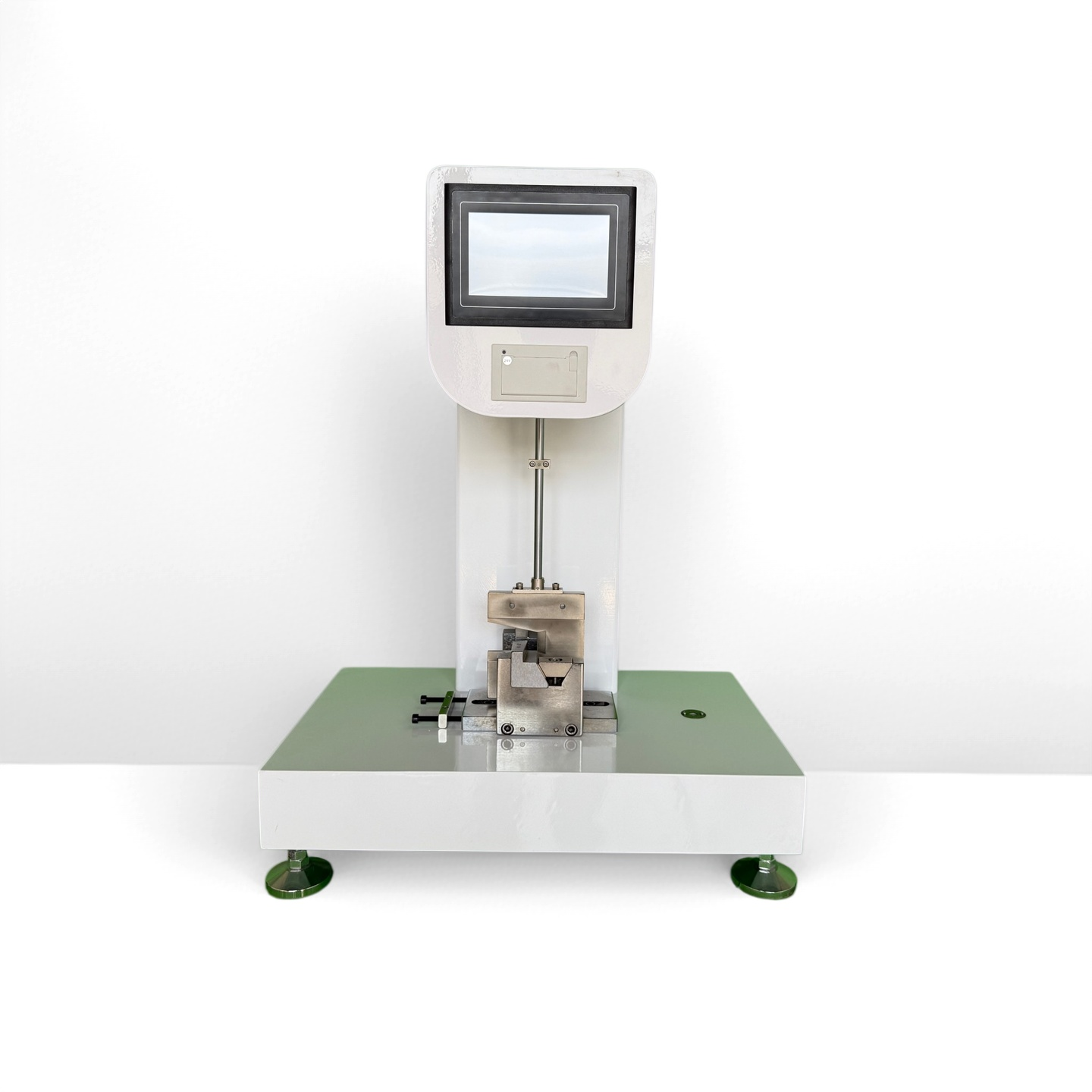
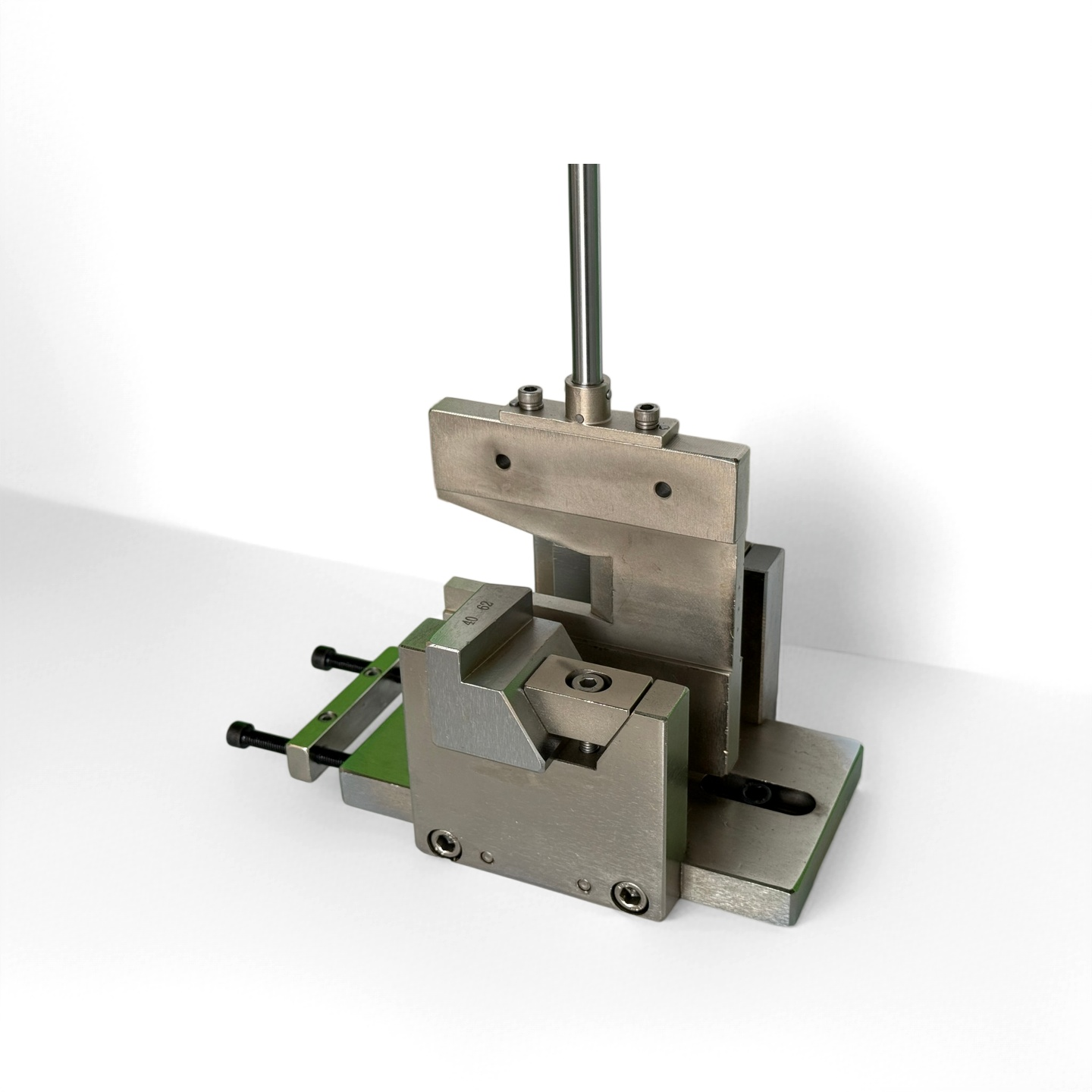
Charpy Impact Tester for Plastic Pipes
Model: SL-SF50
Impact energy: 15J,50J
Impact speed: 3.8 m/s
Starting angle: 150º
Torque of striker: pd15=8.03848Nm; pd=50J=26.79492Nm
Thickness of striking edge: ≤10mm
Included angle of striking edge: (30±1)º
Corner radius of vice: R1.0±0.1mm
Support span: 40,60,70mm
Power supply: 220V/50Hz
Standard: ISO9854
Features
The mounting structure with a nut makes the replacement of pendulums simple and convenient.
Rigid and reliable construction; the pendulum has an all-cast design and is aerodynamically optimized to provide maximum rigidity in the direction of impact, with virtually no loss due to air resistance.
The 7-inch color touchscreen provides easy adjustment of sample sizes, pendulum energy, units, and calibration data. It also displays the test results: the average value of absorbed energy and impact strength, view test results, U-disk export of test data, etc.
Protective cover.
The absorbed impact energy is calculated using contactless optical digital encoders mounted on the axis of the pendulum.
After the test is completed, when re-latching the pendulum, the electromagnet automatically engages the pendulum catch hook, allowing the pendulum to be latched with ease. This prevents deformation of the pendulum rod and extends the service life of the pendulum.
| Delivery time | Certificate | Whether customization is accepted | MOQ | Packaging information |
| 7 days | CE | No | 1 unit | 1 pc |
FAQ
1. What is the ISO 9854 standard and what does it mainly test?
ISO 9854 is an international standard developed by the International Organization for Standardization (ISO), titled"Thermoplastic pipes for the conveyance of fluids — Determination of pendulum impact strength by the Charpy method". It consists of two parts:
ISO 9854-1: General test method
ISO 9854-2: Test conditions for pipes of various materials
This standard is used to determine the impact resistance of thermoplastic pipes at specified temperatures. By striking the pipe specimen with a pendulum, the material's toughness and resistance to brittle fracture are evaluated.The corresponding Chinese national standards areGB/T 18743.1-2022 and GB/T 18743.2-2022.
2. Which pipe materials is the Charpy impact tester suitable for?
It is suitable for the following thermoplastic pipes for fluid conveyance:
Homopolymer and copolymer polypropylene pipes
Unplasticized polyvinyl chloride pipes (PVC-U)
High-impact polyvinyl chloride pipes (PVC-Hi)
Chlorinated polyvinyl chloride pipes (PVC-C)
Acrylonitrile-butadiene-styrene pipes (ABS)
Acrylonitrile-styrene-acrylic pipes (ASA)
3. What is the basic principle of the Charpy impact test?
A short section of pipe or a strip-shaped specimen machined from the pipe is preconditioned at the specified test temperature. The specimen is then horizontally placed on supports at a defined span in a simply supported beam configuration. A pendulum with a given impact energy strikes the specimen once at the midpoint between the supports. The impact resistance of the pipe is evaluated by observing the fracture behaviour of the specimen or by calculating the impact strength.
4. How to select the appropriate impact energy?
The principle for selecting impact energy is: it should be sufficient to cause obvious damage to the specimen, while avoiding excessive energy overflow. Selection is generally based on the pipe material, wall thickness, and expected impact strength:
Pipe Type | Recommended Impact Energy |
Thin-walled small-diameter pipes (e.g., PP-R residential pipes) | 15 J |
Thick-walled or high-impact pipes | 50 J |
It is recommended to conduct preliminary tests first and change the pendulum energy according to the degree of specimen damage.
Product Inquiry